
You've seen it. A post on X with a hashtag pile that only makes sense on Instagram. A LinkedIn update that says "swipe up" with nothing to swipe. A Threads post that's just a screenshot of a tweet, watermark and all. That's what lazy cross-posted content looks like, and your audience notices before you do.
Here's the annoying part: cross-posting itself isn't the problem. Posting the same idea everywhere is smart. What's dumb is posting the exact same artifact everywhere, formatting mismatches and all, and hoping nobody notices you didn't bother to adapt it. This post is about the specific mistakes that give you away, and how to fix them without spending hours per post.
The hashtag pileup that belongs on a different app
A wall of hashtags is an Instagram habit, and an old one. Dragging 12 hashtags into a post on X or Threads is the fastest way to signal "I didn't think about this platform at all."
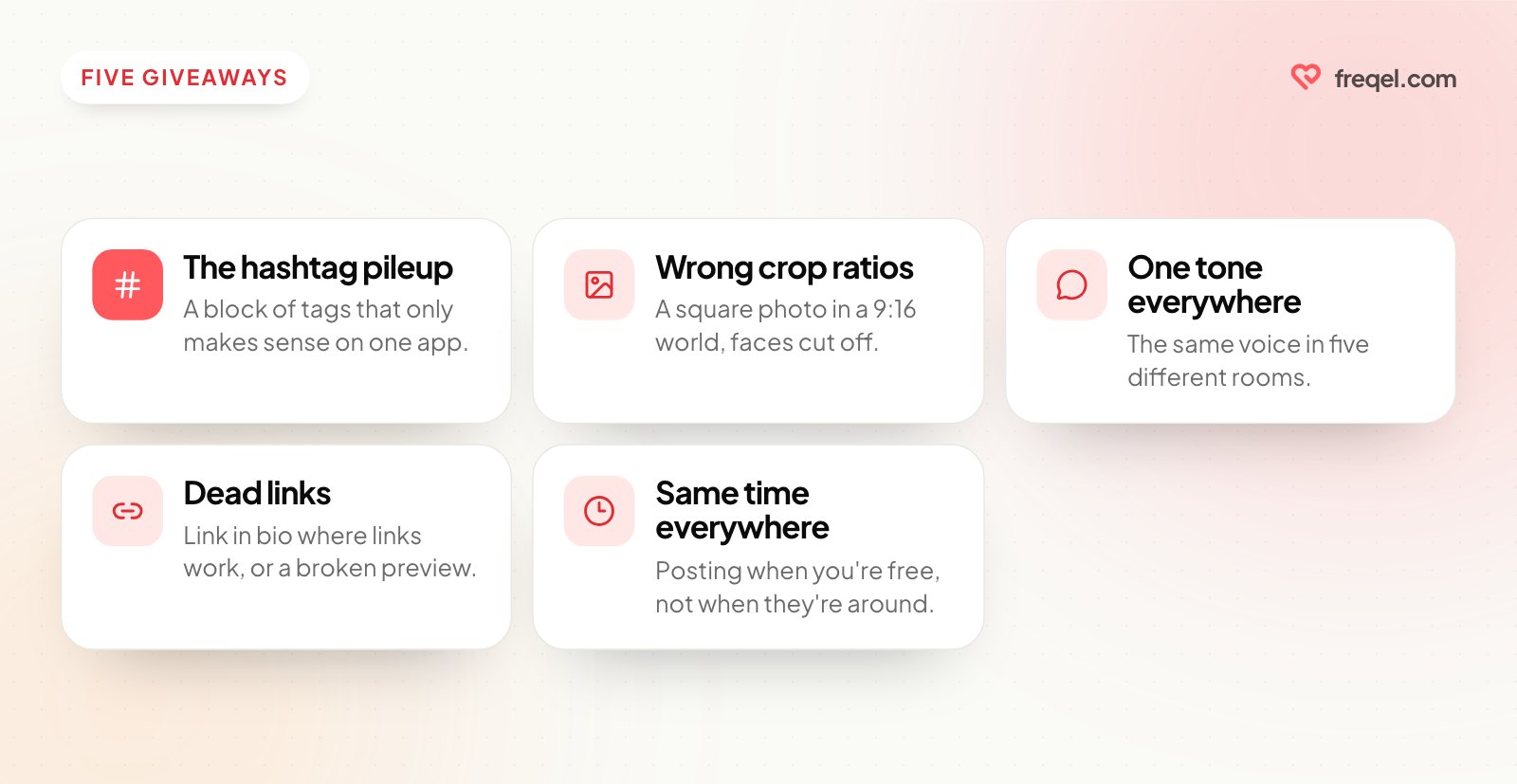
Each network has its own hashtag culture, and ignoring it is one of the classic cross-posting mistakes:
- Instagram: 3-5 relevant hashtags, sometimes tucked into the first comment
- X: one, maybe two, and only if it's a real trend or event tag
- LinkedIn: two or three professional-sounding ones, never crammed at the end like an afterthought
- Threads: one topic tag per post, so pick the one that fits
- Bluesky: one or two specific tags at most; some custom feeds are built on them
This is a five-second fix per post. It's also the fix people skip most, because most cross-posted content looks lazy for reasons this small, not because the idea was bad.
Ignoring image and video crop ratios
Nothing screams "copy-paste job" like a portrait video with black bars on Facebook, or a square image that chops off someone's head on X. Every platform has its own preferred aspect ratio, and defaulting to one size for all of them is a visible tell.
Quick reference, because nobody memorizes this correctly:
- Instagram feed: portrait (4:5) fills more of the screen than square
- Stories, Reels, TikTok and Shorts: 9:16, full vertical
- X: handles landscape and vertical, but very tall images get cropped in the timeline preview
- Facebook: flexible; vertical video fits the Reels-style player
If you're doing this by hand, it means exporting four versions of the same clip. That's exactly the kind of busywork that makes people give up and post the wrong ratio everywhere. At minimum, look at a preview of each platform's version before it's published, not after someone screenshots it.
Writing one tone for five different rooms
LinkedIn is a conference room. X is a bar. Threads is somewhere in between with more sarcasm. Posting identical corporate phrasing to all three isn't consistency, it's tone-deafness.
You don't need five different personalities. You need one voice with a dial. Say the same thing, adjust the volume:
- On LinkedIn, add the context and the "why this matters for your team"
- On X, cut it to the sharpest sentence and drop the framing
- On Threads, add a bit more personality, maybe a question at the end
- On Facebook, spell out things you'd assume your X audience already knows
This is the part most scheduling tools get wrong, they let you write once and blast the identical text everywhere. That's how you end up with the mistakes that make cross-posted content look lazy in the first place. Small wording tweaks per platform take under a minute each once you're set up to do it.
Dead links, broken previews, and platform-specific link etiquette
Platforms treat links differently. Instagram captions don't make links clickable, so "link in bio" is the norm there. Most other platforms link fine in the post itself, though some, X most openly, are widely reported to show posts with outbound links to fewer people. Posting the same "link in bio" instruction everywhere, even where the link works in-post, reads as inattentive.
Common version of this mistake:
- Saying "link in bio" on a platform where you could've just linked directly
- Leaving a UTM-tagged link with tracking gunk visible in the post text
- Letting an auto-generated preview card show the wrong headline or a stale thumbnail
None of this is hard to fix. It just requires actually looking at each post before it goes out, which is exactly the step people skip when they're juggling six tabs and a spreadsheet of captions.
Posting at the same time everywhere, regardless of when people are actually there
Your Instagram audience might be scrolling at 8pm. Your Facebook Page's followers might check in over breakfast. Blasting everything at 9am because that's when you sat down to write is a scheduling mistake, not a content mistake, but it produces the same lazy result.
You don't need a perfect slot for every network, but check your insights and stop treating every platform as one audience. When one clearly peaks at a different time, schedule that version separately. More in the best times to post.
How this looks day to day in Freqel
Here's the workflow that fixes most of the mistakes above without adding hours to your week. You write the core idea once in Freqel. Then you tweak the caption per platform right there, with a preview of each platform's version and its character count before anything goes live.
Swap the hashtags for Instagram. Trim the X version to one punchy line. Give Facebook the extra sentence of context. Attach a different image for a platform if the first one doesn't fit. Then schedule it, or post it now, from one place instead of five open tabs and a notes app full of half-finished captions.
Even changing just the first line per platform is the difference between looking intentional and looking like you're running on autopilot.
The pattern behind all of these mistakes
Every mistake on this list comes from the same root cause: treating five platforms like one platform. Hashtags, crop ratios, tone, links, timing, they're all downstream of that one assumption. Fix the assumption and the individual mistakes mostly fix themselves.
The good news is you don't need a five-person social team to avoid looking lazy. You need a process where adapting content per platform is the default, not the extra step you skip when you're busy. If you're curious how other creators structure that process, we broke it down in a weekly content system for solo creators, and if hashtags are your weak spot, do hashtags still matter in 2026? goes deeper.
None of this requires more creativity. It requires a system that makes the small platform-specific edits easy instead of optional, which is the whole reason we built Freqel the way we did: write once, adjust fast, and post everywhere without any of it looking like an afterthought.
Try Freqel
Write once.
Post everywhere.
Schedule one post to Instagram, TikTok, YouTube, X, Threads, Facebook and Bluesky. 7 days free on every plan.