
You write the perfect post. Sharp hook, clean point, good link. Then you paste it into Threads and realize it's 40 characters over, so you start hacking words out and now the joke doesn't land anymore. If you post on more than one platform, you've done this.
Character limits on every platform aren't just a technical annoyance. They quietly shape how you write. Know the limits and write with them in mind, and you save yourself the panic-edit right before you hit publish.
The actual numbers, platform by platform
Here's the current landscape, roughly, because platforms tweak these without much warning:
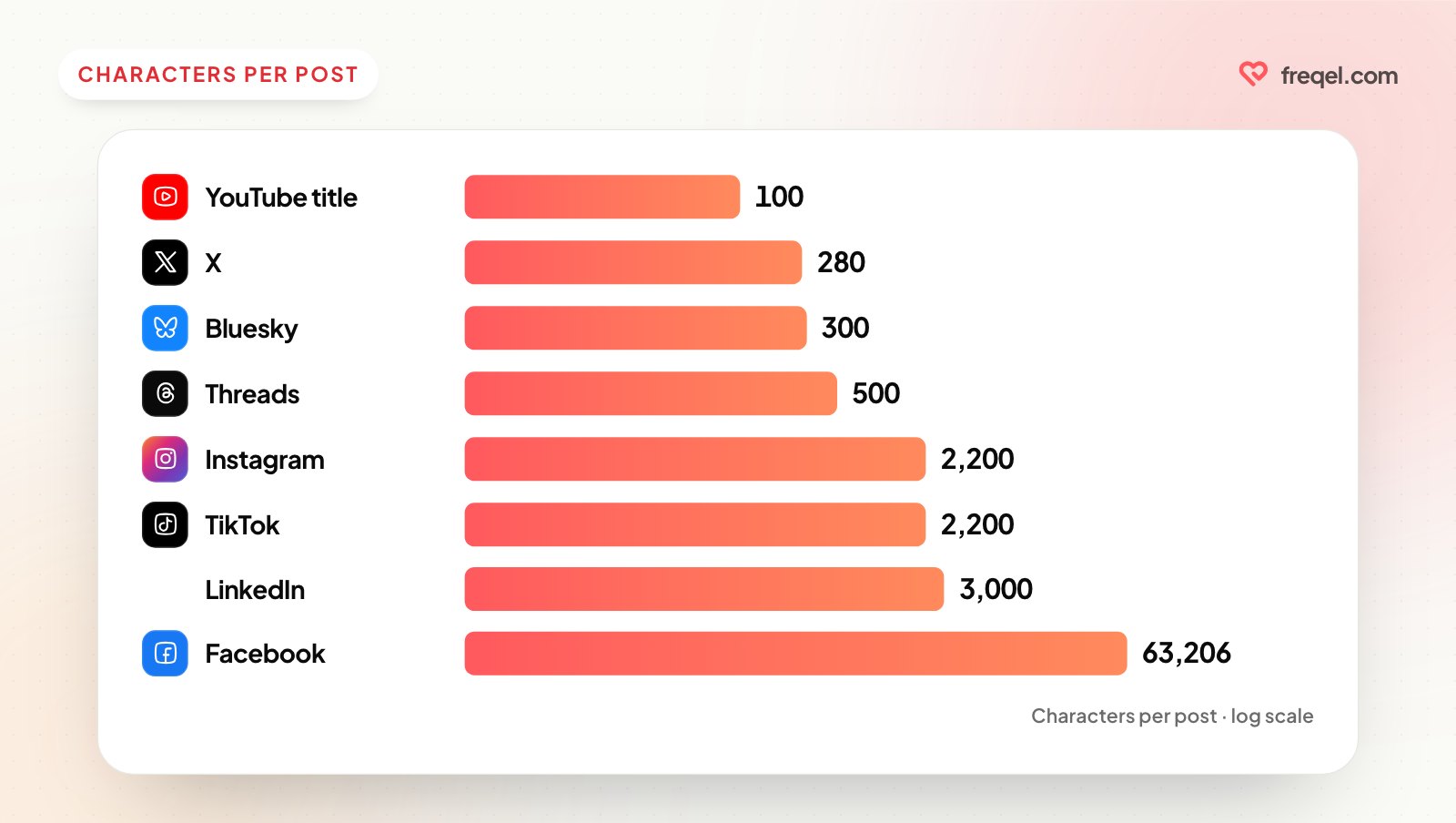
- X (Twitter): 280 characters for most accounts. Premium subscribers can post up to 25,000, but long posts are cut off in the timeline until someone taps "Show more".
- Instagram: 2,200 characters per caption, but only the first line or two show before "more" (roughly 125 characters).
- Threads: 500 characters per post. Longer thoughts go in a reply chain.
- Facebook: 63,206 characters technically allowed, but longer posts collapse behind "See more" after a few lines.
- Bluesky: 300 characters, closer to old-school Twitter than new Twitter.
- TikTok: 2,200 characters per caption, hashtags and mentions included. Only the start shows over the video.
- YouTube: 100 characters for a title and 5,000 for the description.
- LinkedIn: 3,000 characters, with "see more" after roughly three lines.
Notice the pattern: the hard limit and the effective limit are almost never the same number. That gap is where most posts quietly fail.
Why the visible limit matters more than the max
Plenty of people never tap "see more." Feed scrolling is fast, and a fold is a wall. If your point lands after the fold, a lot of readers never see it.
This means the real writing skill isn't "fit under the character limit." It's front-load the payoff before the fold and treat everything after as optional bonus content for the people who do tap through.
On Instagram that means your hook lives in the first line, not your third paragraph. On LinkedIn it means the punchline can't be the last sentence of a five-paragraph story. Write for the fold, not for the limit.
A simple system for writing within character limits
Instead of memorizing six numbers, use three buckets. It's easier to hold in your head while you're actually writing.
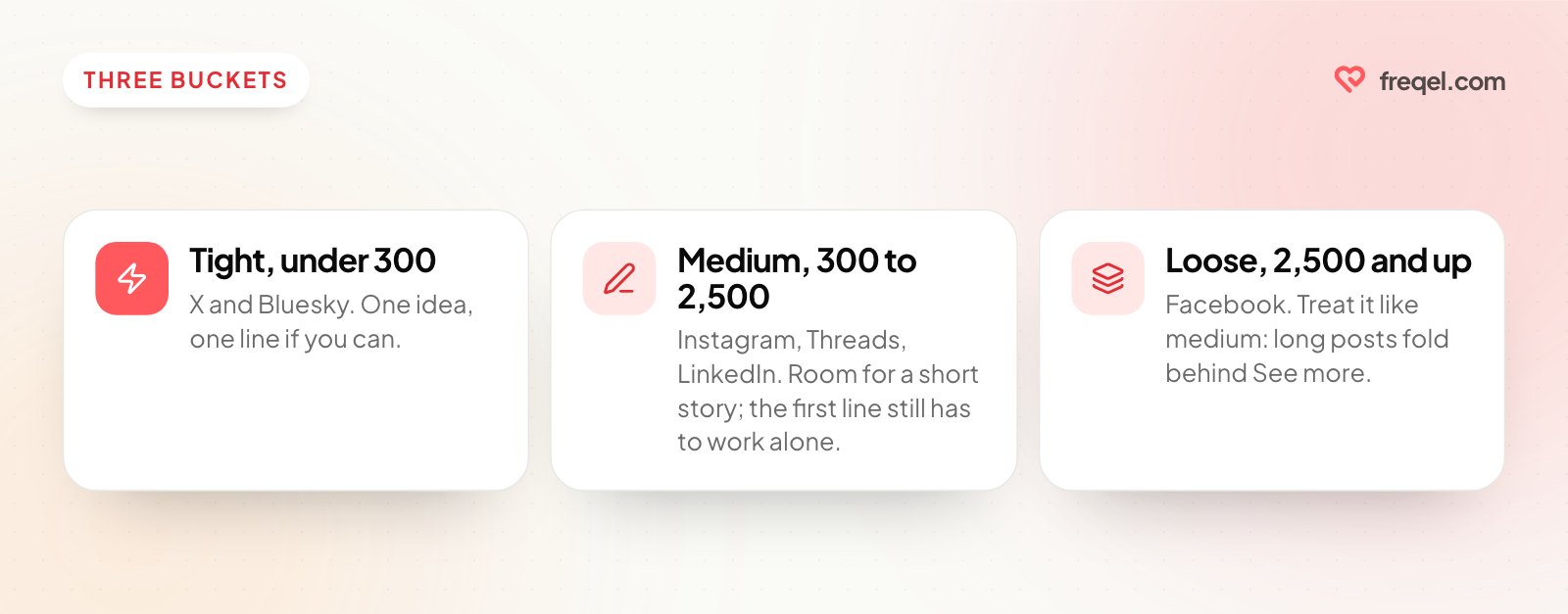
- Tight (under 300): X and Bluesky. One idea, one line if possible, no throat-clearing.
- Medium (300-2,500): Instagram, Threads, LinkedIn. Room for a short story, but the first sentence still has to work alone.
- Loose (2,500+): Facebook. Technically unlimited, but treat it like Medium anyway because the fold behavior is basically the same.
Write your Tight version first. It forces you to find the actual point of the post — the one sentence that matters. Everything else you write for other platforms is that sentence with room to breathe.
Rewriting one post for six platforms, an example
Say the core idea is: "We shipped a scheduling calendar view, it's live now."
- X/Bluesky: "New: a calendar view for scheduling posts. See your whole week at a glance. Live now →"
- Threads: same as X, maybe drop the arrow, add one line of context since you have a bit more room.
- Instagram: open with the calendar hook in line one, then use lines 2-5 for the "why we built it" story, since people who care will tap more.
- LinkedIn: reframe as a lesson — what building it taught you about your users — because that's the register LinkedIn readers expect.
- Facebook: closest to your Instagram version, slightly more casual tone, maybe a question at the end since Facebook still rewards comments.
Same fact, five different shapes. That's not busywork for its own sake — it's what actually gets each post read on its own platform instead of feeling like a copy-paste job. This is also exactly the kind of thing that eats an hour if you're doing it manually in six browser tabs.
Where a tool like Freqel helps
Doing this by hand means counting characters in five compose boxes. In Freqel you write the core post once, and every platform you picked shows its own character count against its own limit, so you see straight away that the Bluesky version is 40 over and the Instagram one has room to spare. Next to it is a preview of the post on that platform.
You tweak the wording per platform right there, trimming for Threads and Bluesky, letting Instagram run longer. Then you schedule it, or post it now, from one place.
If you want more on the scheduling side of this, read how to post to every platform at once, and if timing is your bigger problem, see the best times to post.
Mistakes that waste your character budget
Most people don't run out of characters because they have too much to say. They run out because of habits that quietly burn space:
- Starting with "I've been thinking about..." — cut it, start with the thought itself.
- Stacking hashtags on X and Bluesky, where every tag eats into a tight limit and makes the post harder to read.
- Writing the caption after picking the image, so the words feel like an afterthought instead of the point.
- Pasting the same 400-word LinkedIn post into Threads and letting it get chopped mid-sentence.
Fix the first sentence and most of the rest sorts itself out. A strong opener does more work than three extra sentences of explanation.
For more on the caption side of this specifically, see writing captions that work on every platform.
Character limits aren't going away, and honestly they're not the enemy: they force clarity you'd probably skip otherwise. The real cost is rewriting and re-checking each version by hand. Write the tight version first, let the other platforms have a little more room, and check each one before it goes out.
Try Freqel
Write once.
Post everywhere.
Schedule one post to Instagram, TikTok, YouTube, X, Threads, Facebook and Bluesky. 7 days free on every plan.